
Review: A Book of Beasts
Note: This review was originally on July 6, 2022 at the collective RPG review blog, Bones of Contention. If you want to read more in-depth criticism and analysis of TTRPGs by the absolute top-notch bloggers in the field, there is no better avenue in which to begin your search.
This bestiary is a supplement for a supplement. In 2015, Jason Lutes wrote “The Perilous Wilds”, a supplement for overland exploration for the Dungeon WorldRPG, which is regularly cited as an essential product for that system and a source of inspiration even for those who lack any interest in Dungeon World. “A Book of Beasts” was a stretch goal for the Kickstarter for The Perilous Wilds.
The premise for A Book of Beasts is that The Perilous Wilds provides a series of random tables for generating creatures, and that all 56 of the monsters included would be rolled up using those random tables. Just knowing that each monster was born of random prompts has a certain magic akin to learning that classic D&D monsters like the Owlbear or the Rust Monster were inspired by deformed children’s toys. To add to this creative flourish, Jason assigned each creature “to a different artist, giving them very little direction in interpreting [his] written descriptions.” I think the reason that this approach tickles me so much is twofold: Firstly, I love improv and watching someone take a few random prompts and create something cool and cohesive, and, secondly, it is reminiscent of medieval bestiaries, where you had monks describing and drawing strange monsters such as “elephants” or “lions” via an ancient game of telephone, to often hilarious results.
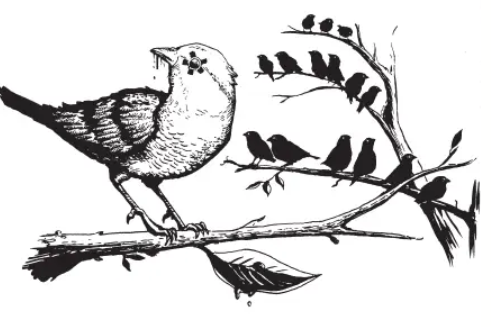
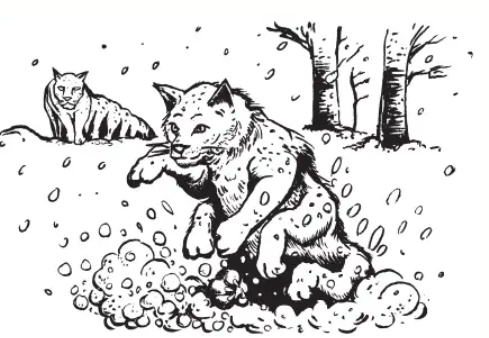
But the wacky process means nothing if the actual monsters are no good. A Book of Beasts, however, fully delivers on being a fun and gameable bestiary. I always like the more obvious creatures that are just two animals combined (such as the White Cat of One Hundred Paws, which is a snow leopard-centipede hybrid, or the Owlbat, which is an owl-bat), but the real mark of a bestiary’s quality is if the really bizarre monsters seem like something you could bring to your table. A Book of Beasts offers plenty of weird monsters that still feel like they have some reason to exist in a fantasy world from the small (e.g., the Prayer Sparrow, a small bird that pecks the eyes out of unrepentant petitioners at religious functions) to the humanoid (e.g., the Wastewalkers, reptilian nomads who can survive without water for weeks on end) to the larger than life (e.g., the Architect Lichen, an intelligent fungus that grows to look like ancient ruins and always expanding).
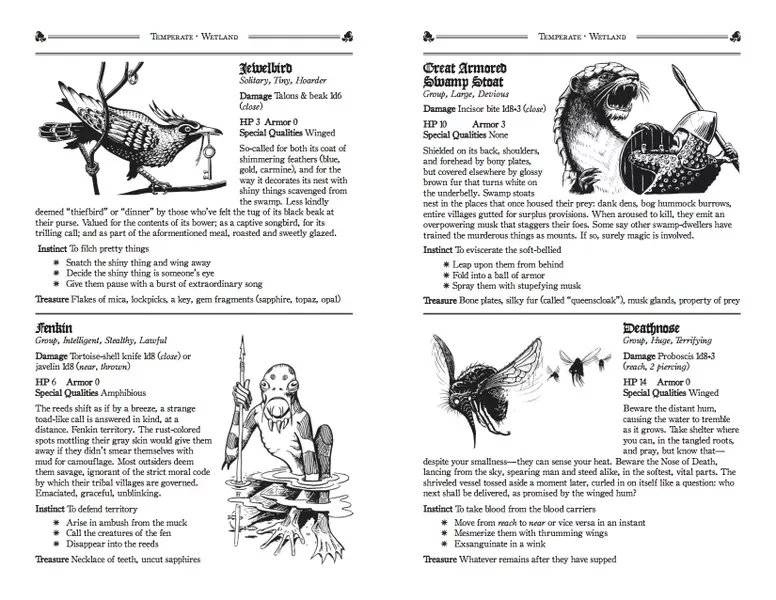
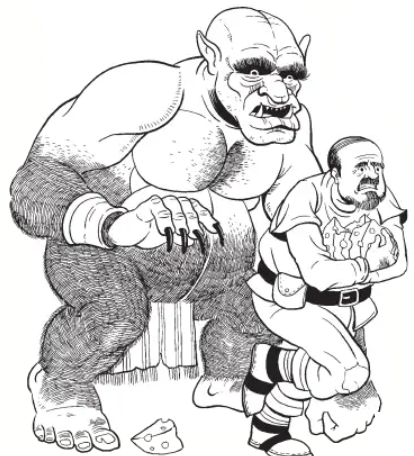
But this bestiary is far from perfect, as some entries run toward the generic. For example, the Fenkin is a toad-like humanoid that lives a tribal and territorial existence in the swamp, which is a bit too similar to…basically every swamp-dwelling humanoid proffered by D&D, honestly! Sometimes even a small twist goes a long way. Such as the Hulking Brute, which might have been yet another ogre-alike if not for their fascination with cheese, which causes them to press cheesemakers into servitude to produce poor quality, moldy cheese (their favorite).
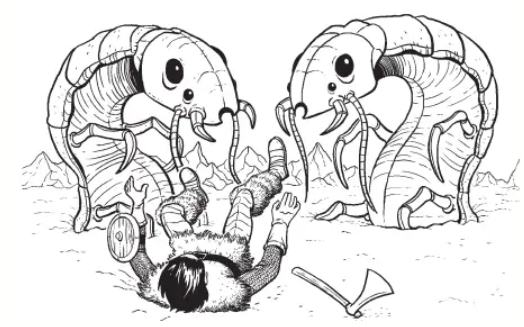
I award bonus points to bestiaries that hint at how the creatures interact with each other. It is all well and good to present a list of cool monsters for the player characters to fight (or run from), but adding details about how the monsters interact amongst themselves makes them feel more real and also provide useful guidance on how to place them in the game naturalistically. While A Book of Beasts largely presents stand-alone monstrosities, it shines when there is interaction. For instance, The Snow Creepers are basically D&D Ankhegs for frozen climates, but they are made way more interesting by the inclusion of the Flurry Worm, which are larval creepers that appear like a flurry of snow when a female Snow Creeper’s egg sac bursts open. This clever climatological camouflage is the setup for a horrific payoff–they Flurry Worms burrow into the flesh of their unlucky hosts where they gestate for a month before “[e]merg[ing] in some horrific fashion.” That is terrifying; I love it.
The organization also makes these monsters easy to bring to the table. The bestiary is organized not alphabetically by name, but first by climate (frigid, temperate, torrid) and then within each climate by terrain type (lowland, wetland, woodland, highland, underland). Each climate-terrain combination includes four creatures on a single spread. The result of this organization is that the referee can open to the appropriate climate-terrain combination for where their players are (or the location they are prepping) and pick one of the monsters on that spread. While it includes the obvious index of listing the creatures alphabetically in the back of the book, organizing the monsters based on where they can be found makes this bestiary a handy tome to have with you while running the game and minimizes flipping between pages during play.
Disclaimer: The cover art for A Book of Beasts is by Keny Widjaja, who is an interior artist on my upcoming Barkeep on the Borderlands adventure. The interior illustrations are by Carl Antonowicz, Billage, Jan Burger, Niels Burger, Jonathan Fine, and Josh Rosen. Keny’s inclusion as an artist in this bestiary did not impact my review.
A Book of Beasts was written by Jason Lutes. It can be obtained in PDF format for $5 on DriveThruRPG.