True Names in Elf Games
There is a name blogwagon declared by Sundered Shields and Silver Shillings. However, I was a bit early on blogging a d100 list of names. And my typical method for naming NPCs in my home games is not particularly novel: it is a combination of the advice from Perilous Wilds (choose an analogous real-world language or culture for the group of people and use their names or names that sound like those names with some consonants shifted) and, for names I need to improvise, some combination of Method 9 (Stupid Jokes) and Method 10 (Trust Your Heart) as described in this post from Whose Measure God Could Not Take.
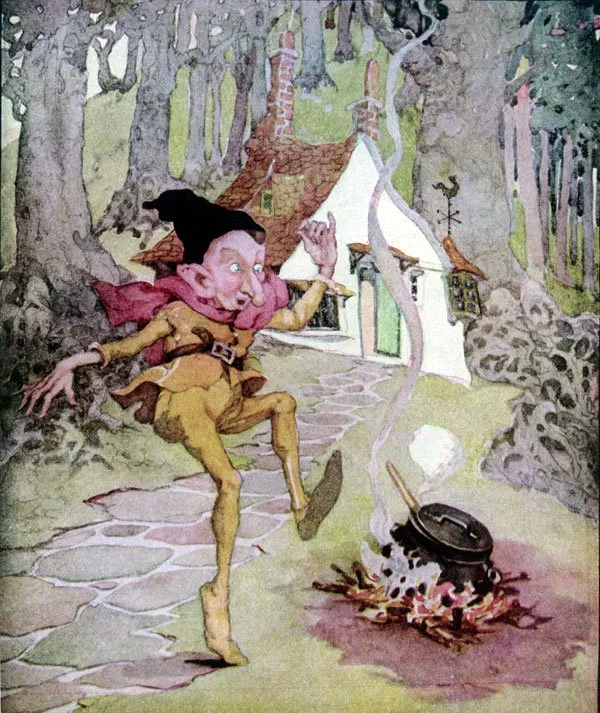
But what of True Names? Almost every culture has some variation of this concept somewhere in their folklore and if you are familiar with fantasy literature (and if you aren’t: who are you and how did you find this post?), you are already acquainted with the concept. If you aren’t or if you’d just want a refresher with an emphasis on how it’s appeared in D&D and the fiction that inspired it, I recommend this post (including the comment section) from Dreams in the Lich House. While you’re already doing background reading, this post from Roll to Doubt is also worth checking out in emphasizing the power of True Names.
Some tropes from fiction do not translate easily to the TTRPG medium. Fantasy fiction is, for instance, replete with chosen ones, but it takes a little more doing to capture that trope in a way that is satisfying for a typical group of player characters (whereas, you’re all a bunch of Conan-types looking for gold and danger translates with little effort).
True Names are difficult to translate (without baking it into the system itself) for two main reasons: (1) learning a True Name is a bit of a “guess what’s in the GM’s pocket” game, and (2) once you have the True Name, it is very powerful for an ongoing campaign. I say it’s a Guess What’s In My Pocket problem because how else do you learn the True Name? Sure, you may have to go on an epic quest through hell to find the talisman it is inscribed upon, which is better than some research montage at the local library during downtime, but that still feels very linear and referee-directed to me in practice. Once you find whatever you’re looking for, presto, you have the True Name. Or even worse, the GM may just give it to you outright by having you overhear the imp stupidly singing a song about how their True Name is Rumpelstiltskin (which, by the way, translates roughly to “wrinkled foreskin”). And once you have the True Name, you basically can control or destroy that entity. There is a reason in most of the fairy tales about True Names, the protagonist learning the True Name sets up the climax of the story. Roleplaying games aren’t actually stories (they may produce stories) so what works in a story may not work in an ongoing campaign.
To solve these issues, I have decided that a True Name is better in TTRPGs when it isn’t some made up fantasy words but is instead a short sentence. Maybe, in the fiction, it is a single word in the ancient language of magic that even wizards do not fully comprehend but when spoken aloud is understood by all no matter their language as a sentence in their native tongue. Why a sentence? Because I am about to steal some of the better ideas from a forthcoming game called Realis which, if you aren’t familiar, some of the juicier bits are described (in the context of The Green Knight) over at the Sporadic Distillations blog. And the sentence also constrains how you can use the True Name and how powerful the magic can be.
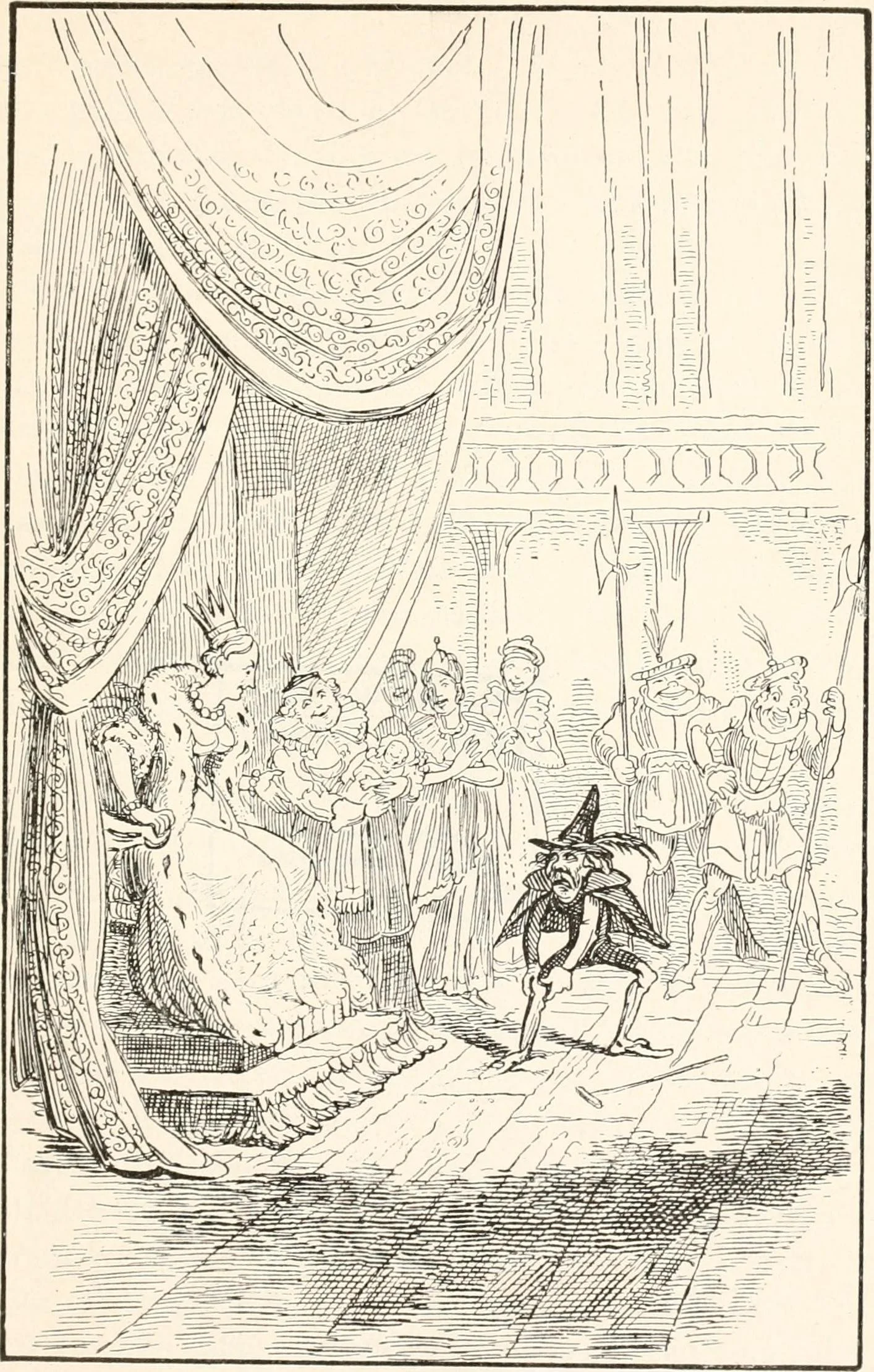
A creature (typically a fairy or a demon) has a True Name that describes the central truth about that particular creature. No two creatures have the same True Name. Each True Name is phrased as a declarative sentence, typically beginning with “I always” and be 1d6+2 words in length. So the imp we know as Rumpelstiltskin may have a True Name that translates to “I Always Drive A Hard Bargain.”
To learn a True Name typically requires some research where you may learn a word or two at a time. If anyone learns all the words to a True Name, they can use its power against its owner, but if only part of a name is known, only a spellcaster can try to “guess” and supply possible missing words but only after succeeding on a Save Versus Wands or an Intelligence Check or whatever your equivalent is. A failed “guess” of a True Name, however, causes the target to learn one word of the guesser’s True Name. For example, the party investigating the town’s imp problem has learned that the true name includes the words “drive” (the local sage knew this) and “bargain” (so it was inscribed in a dusty tome at the bottom of a dungeon). The metagaming players have guessed, based on their knowledge of English idioms, that the missing part of the name is “a hard”. However, the fighter can’t simply go to Rumpelstiltskin and say “I Always Drive A Hard Bargain, I command thee!” The player may know the name, but the character doesn’t. But the wizard, after making their save, can guess it and if they guess correctly, they can now use the True Name. If they fail, the player needs to come up with their own True Name (same process as making the fairy/demon’s true name) and then reveal one word of it to the imp.
True Names are not absolute power. Instead, once you know it and choose to wield it against its owner, you can either summon or command them. Summoning them causes the target to teleport to you instantly, but only after succeeding on a Save Versus Wands/Intelligence Check/equivalent, with failure meaning the target learns one word of the guesser’s True Name, so it is not without risk. Unlike guessing, non-magic users can also use True Names in this manner. Commanding the target is easier if it is related to their True Name. If the command is related to the target’s True Name, then it just requires another Save with a word of the user’s True Name on the line. If the command is not related to the target’s True Name, the target must still do it, but it will change their True Name permanently. When this happens, the target “sharpens” the sentence of their True Name by adding a limitation, qualification, or restriction to the sentence (an additional 1d6 words). So after the player characters force Rumpelstiltskin to unlock a door in hell (which isn’t related to his True Name), Rumpelstiltskin may sharpen their True Name to “I Always Drive A Hard Bargain For A Damsel In Distress” or “I Always Drive An Increasingly Hard Bargain”.
The sharpened sentence means the user no longer knows the target’s True Name. They know part of it, but not all of it, so the target is now free from being compelled and summoned all the goddamn time. It also means that, if they are to learn the target’s new True Name (easier because they still know most of it), the types of commands they can issue without causing the True Name to mutate again must abide by the new limitation, qualification or restriction. I would also let this change impact how I roleplay the NPC. For instance if Rumpelstiltskin previously was just always trying to make unfair deals in general, after their sentence is sharpened to “I Always Drive A Hard Bargain For A Damsel In Distress” they may only offer those bargains to certain characters or if it were “I Always Drive An Increasingly Hard Bargain” they may start offering less onerous deals at first before they start demanding first born children. This allows the players to at least have some framework from which to guess at what the new True Name may be (and tempt them to officially Guess and risk their own True Name being discovered) beyond simply following a quest or doing a research montage to guess what is in my pocket.
And Now For Something Completely Different: Indonesian TTRPG Blogwagon!
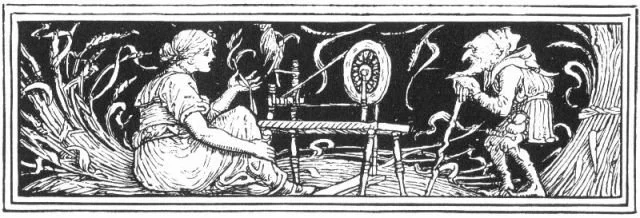
The Name Blogwagon isn’t the only bandwagon that has been issued lately. There is also the Indonesian TTRPG Blogwagon, as started by the Afraid of Encounters blog. I will not pretend to be well-versed in Indonesian fairy tales, but I do have my trusty internet to at least achieve a modicum of familiarity. In these efforts, I learned of a story called Ringkitan and the Cuscus. This fits under the “Animal as Bridegroom” grouping (for my fellow westerners, think Beauty and the Beast or the Princess and the Frog). Basically, a woman with jealous sisters marries a cuscus (a sort of bug-eyed looking possum) who turns out to be a handsome man. What struck me (specifically, it struck me as a means for shoehorning two blogwagon topics into one post) in reading this story was the following passage:
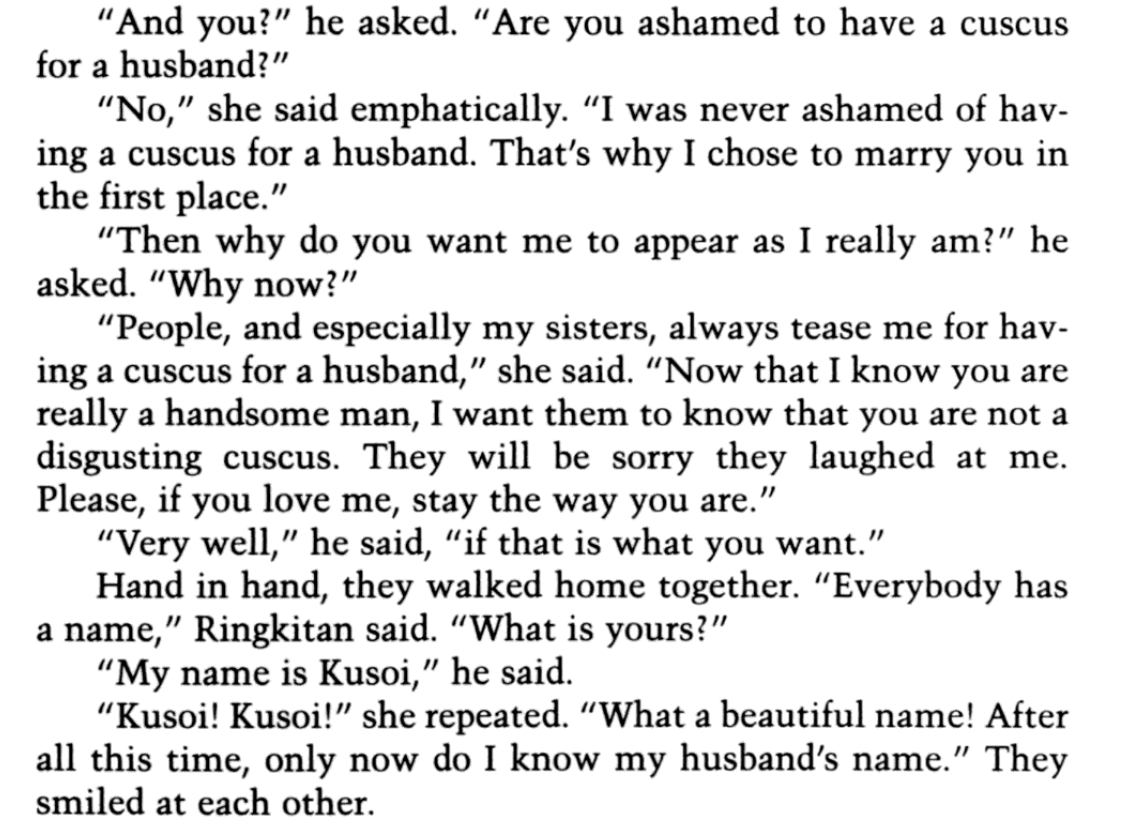
To spew forth something gameable from this rabbithole (cuscushole?) of research, it is well known that of every animal has a 1-in-6 chance of being sapient and capable of speech. Of these, a further 2-in-6 (very nearly 1-in-20) are not truly animals at all but humans who are transformed, sometimes willingly and sometimes not, as the animal. For these special animal-humans, if you learn their True Name, you may choose, at no cost, to cause them to remain in either human or animal form permanently. These animal-humans are particularly starved for love, since they do not fully belong in either human or animal societies. As such, they are typically willing to impart their True Name to anyone with whom they share mutual True Love. True Love is a force as powerful as, if not more so, True Names.

My blog posts are shared early as a reward to all of my Patreon supporters. If you want to support my blog, games, and get early access to all such endeavors, then get thee hence to my Patreon. You can also support my efforts by buying any of my games from my shop.