
What The Odyssey (2026) Can Teach Us About Running TTRPGs
I saw The Odyssey (2026), and it was good. This post will contain some spoilers for a nearly 3,000-year-old story, as retold more recently via a more popular medium than epic poetry, so if you are absolutely allergic to that, just go watch the movie (perhaps in IMAX 70mm, that should be easy to find a showing of) then come back and read this immediately.
I have the “can’t stop thinking about elfgames” disease, so here are some lessons that came to mind as being illustrated by the latest iteration of The Odyssey.
I. You Don’t Need to Personify Your Deities
“How do I religion” is a topic so nuanced and prone to idiosyncratic preferences that easily 40+ bloggers could opine on it in the few days necessary to enthrone a new pontiff. However, we are endlessly influenced by the first-movers of the hobby, so Deities & Demigods (1980) looms large concerning what it means to be a god in Dungeons, Dragons & its descendants. And the answer according to D&D (Deities & Demigods) is that the gods are all real, AND you can kill them. Most modern world religions ascribe to the former, but you don’t hear about how killable god is in your typical pews. However, Deities & Demigods basically treated all religions as essentially Greek Pantheons but with different cast members, and most subsequent D&D settings have followed suit with their ahistorical form of polytheism. And in Greek myth, the gods walked amongst mortals and often fucked with them in all manner of ways. They were very much personified.
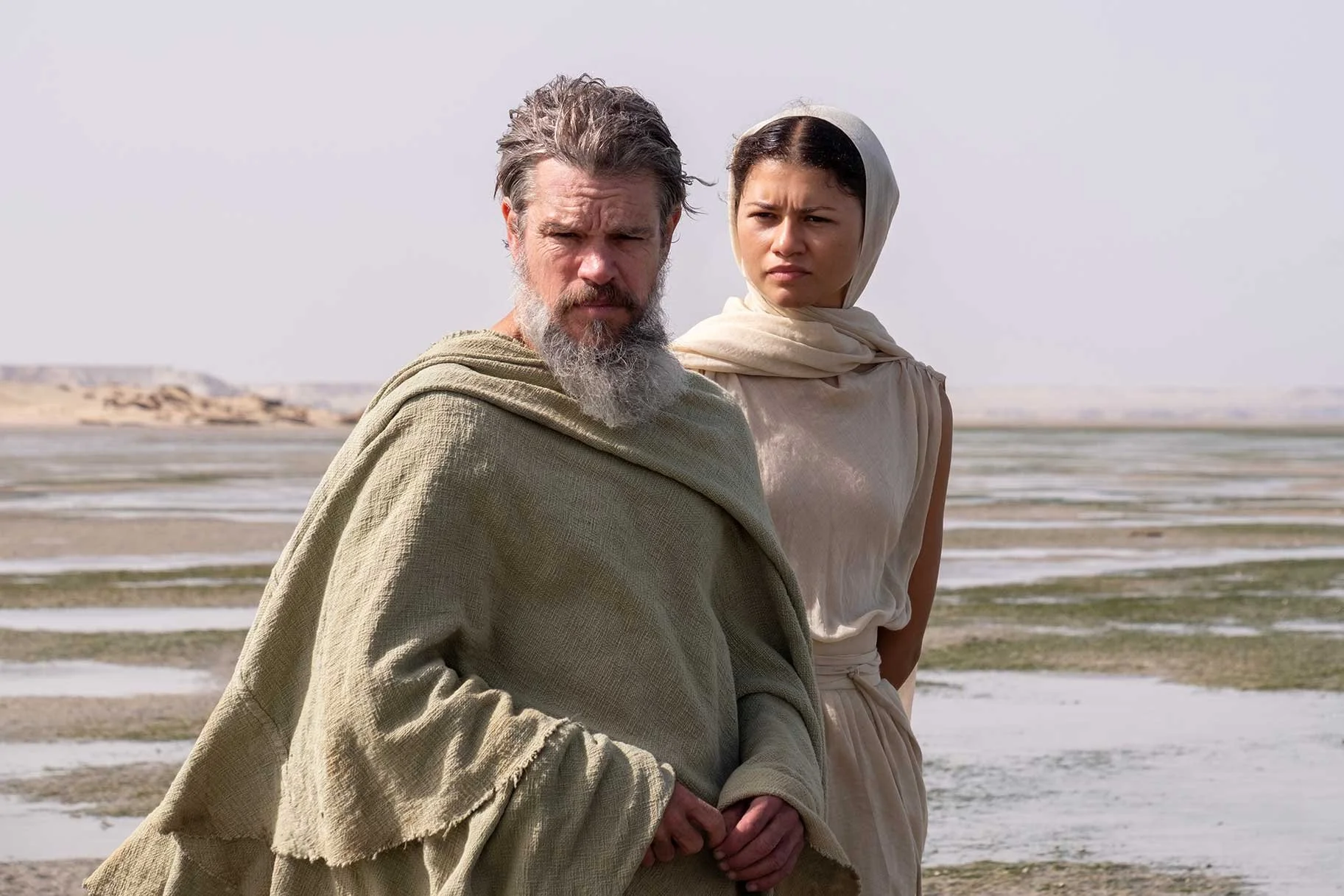
Not so in Christopher Nolan’s The Odyssey. Odysseus never actually hears from Poseidon who is so angry at him, never sees Zeus whether in disguise or not, and never has Hermes interject on his behalf. The only possible deity that appears on screen is Athena, and it is arguable that (spoilers but also conjecture) the Athena we see is not the goddess herself but rather an apparition of guilt since she is identical to the priestess of Athena that Oysseus sees killed during the sack of Troy that he perpetrated. But perhaps that priestess was Athena, just in disguise. Gods do that from time to time.
Even if you have a pseudo-grecco pantheon of gods, you need not make them glorified NPCs in the campaign. As soon as you let your grubby little murderers that you call player characters meet a god face to face, there is a 5-in-6 chance they will decide to kill that god as soon as they are able. I don’t know why that is such a ubiquitous reaction (other than it is fun to kill gods, frankly), but it is undeniable. If you don’t want your gods to lose their luster and sense of mystery, you can have them affect the world (or for the NPCs to attribute things going on in the world, like the harsh seas or the bad harvests, to the gods, which is effectively the same thing) from off-screen. They can be as active in your campaign as Poseidon is in The Odyssey without ever needing to physically show up. Gods can work remotely; they need not step foot into the office.
You can also just make the gods the gay people who live in your phone.
II. Add A Threat to Civilization
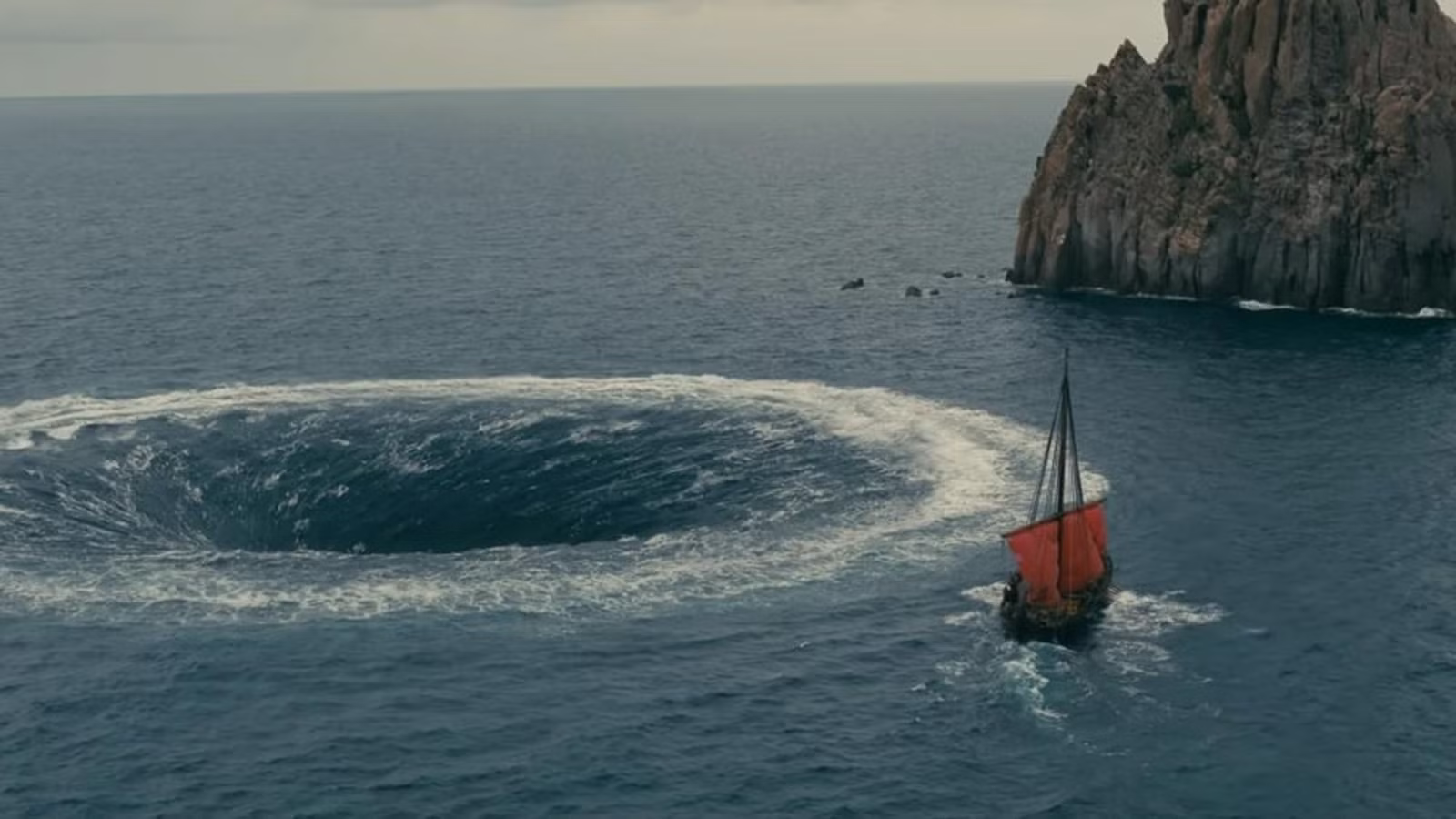
This is one of the more brilliant and thought-provoking turns in this rendition of the old story: Odysseus’ subterfuge at Troy is cited as the starting point for the Sea People, the mysterious raiders that swept through the great civilizations of the Bronze Age Mediterranean, leaving smoldering ruins in their wake. And throughout the film, the mysterious raiders are noted as a threat that all of Macedonia is on guard against. It heightens the stakes of the court intrigue with Penelope, Telemachus and the suitors because while the layabouts would-be usurpers graze in the palace, the city needs to prepare for the possibility of invasion while they are leaderless. And it gives more pressure to Odysseus to make his return before this threat makes its way to his doorstep.
The first time I recall adding threats to my games other than the “main” threats of the campaign was after playing Dungeon World, which had the concept (novel to me at the time) of “Fronts”. I think Fronts actually were supposed to represent the main threats, but I always treated them as additional ticking clocks. A front is basically just a threat with various foreshadowing events that happen first, a ticking clock to disaster. The Spouting Lore blog archived a conversation on fronts and how to make them which gives better context to the practice from actual practitioners than from me, a noted Dungeon World disliker. But Dungeon World absolutely has stuff worth stealing, and fronts are among them.
To make it a little more concrete with an example, the main threat (or perhaps opportunity) of Barkeep on the Borderlands is the poisoned monarch in a city rife with factionalism. However, there are other things going on whether the player characters choose to intervene or not: the quasi-parliament is electing a new prime minister, the goblins are doing pranks that each day look more and more like active terrorism, and if you spend enough time in Our Lady of the Sacred Speakeasy later in the week, there is a chance that a chaotic god of the underworld be summoned (a personified god?! Have I so soon forgotten the lesson hereinabove?!). The types of campaigns I enjoy involve lots of plates spinning, where players must choose which they care enough about in order to keep them aloft and which they are willing to see shatter. If there are not one but two or three different sets of dominos already in motion, your players can’t just sit on their hands. Threats push player action, player choices, player agency. Why even play in a static world not threatened by some sort of catastrophe?
III. Keep Monsters Mysterious
This is similar to not personifying your gods in that some things are better left offscreen. This is rote advice though. We’ve, I must assume, already heard the same arguments about how better off Jaws (1975) is for having the mechanical shark not being functional enough to show up frequently on screen. It’s scarier just seeing the fin, more anticipation, more suspense, etc. etc. Well because Nolan has presumably also internalized these types of common wisdom best practices when showing us Scylla.

The effectiveness of that sequence rests on the fact that we never get the full picture. We get glimpses but never a clear view of a monster waiting to be measured. This is akin to Gus L’s admonition that “a decent GM will never describe a monster by the name in the Monster Manual”. Mere taxonomy (or worse, stat blocks) strip the monster of some of its terror. It’s just a stack of hit points, an obstacle between points A and B. Let the monster be an enigma that defies categorization. Or at the very least, let it attack from the shadows, the player characters only ever catching glimpses. They’ll have to figure out the full terror of the monster piece by piece like groping an elephant in the dark.
IV. Foreground Hypo-Diegetic Rules
If you were paying even some attention when you were made to read The Odyssey (or more likely, excerpts from it) in high school, you picked up on the concept of “Xenia” or “Zeus’ Law”, as it is more frequently referred to in Nolan’s The Odyssey. The basic idea is that you should show hospitality to others (and not abuse hospitality shown to you), just in case they are Zeus in disguise. Gods do that from time to time. People evoking, abiding by, and wantonly violating Xenia is such a major throughline that to even start listing examples from The Odyssey (2026) would begin to read like a beat-for-beat summary, and because you are a guest at my blog, I will spare you lest I violate it myself.
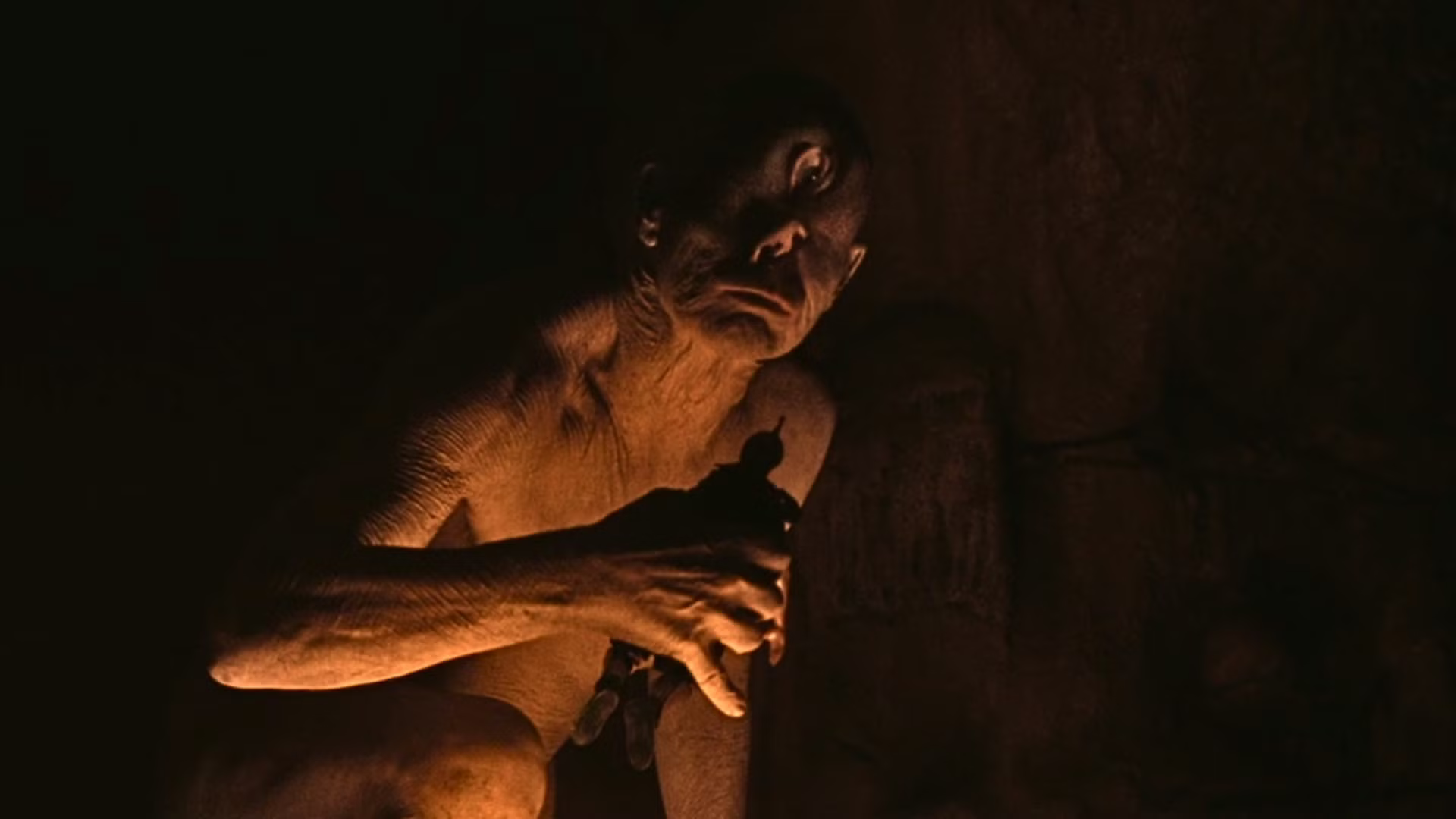
In the context of a roleplaying game, we can understand Xenia as a Hypo-Diegetic Rule. My colleague Sam Sorensen of the “Sam Sorensen” blog defines a Hypo-Diegetic Rule as “a rule that exists inside the imaginary world, one created and followed by diegetic people or organizations. A rule not of the world but a rule in the world. Most often felt in the breach. In general, players whose characters break a hypo-diegetic rule are not considered to be cheating.” In an expressionist game, as defined by my other colleague Jay Dragon of the “Jay Dragon” blog, these sort of rules that abstractly simulate the character’s social reality are given equal billing (and the differentiation may be flimsy, if there is any at all) with endogenous or diegetic rules. And, in my humble experience, when hypo-diegetic rules, the expectations put upon characters in the fiction, are foregrounded, the game is about to become incredibly rich.
If you are playing a D&D-derived game, you probably underplay alignment. You may even defenestrate the whole thing entirely. But maybe you shouldn’t. Instead, hew to the D&D is Always Right principle and consider making it a central fact of the setting. A character’s alignment is not a rule in the way armor class is a rule, but it is a hypo-diegetic rule. If your character is aligned with Law, they are expected to behave lawfully. If Chaos, chaotically. And there are social consequences to breaking those rules. As Jay says supra, “Rules in an expressionist game tell you who your character is expected to be, how society sees them, and how they ought to behave. Rules define the cultural norms and structures enforced upon the characters by themselves, by their communities, and by their world.” D&D’s alignment presents an interesting avenue for imposing this sort of rule into your game. Maybe I’m biased; paladins always were my favorite class.
V. Embrace the Interlude
The Odyssey (2026) is not an epic poem so makes some structural adjustments to conform to the grammar of modern films (and certain prestige television, which shares that grammar). By this, I mean it doesn’t confine the court intrigue of Ithaca to the opening bits with Telemachus and Penelope or the conclusion once Odysseus has returned. Instead, it mostly cuts between these settings. A guy who has only ever seen Game of Thrones would say “getting a lot of ‘Game of Thrones’ vibes from this.” And it is a proven formula in audiovisual storytelling for a reason.
Shifting the spotlight between disparate point-of-view characters generates dramatic tension and keeps momentum high. It’s why when I encouraged referees to split up the adventuring party, I advised “the referee [to] think of themself as a director, cutting between scenes to establish pacing”. However, shifting between halves of the party beat-by-beat during a session doesn’t take the idea far enough to capture what’s going on with The Odyssey.
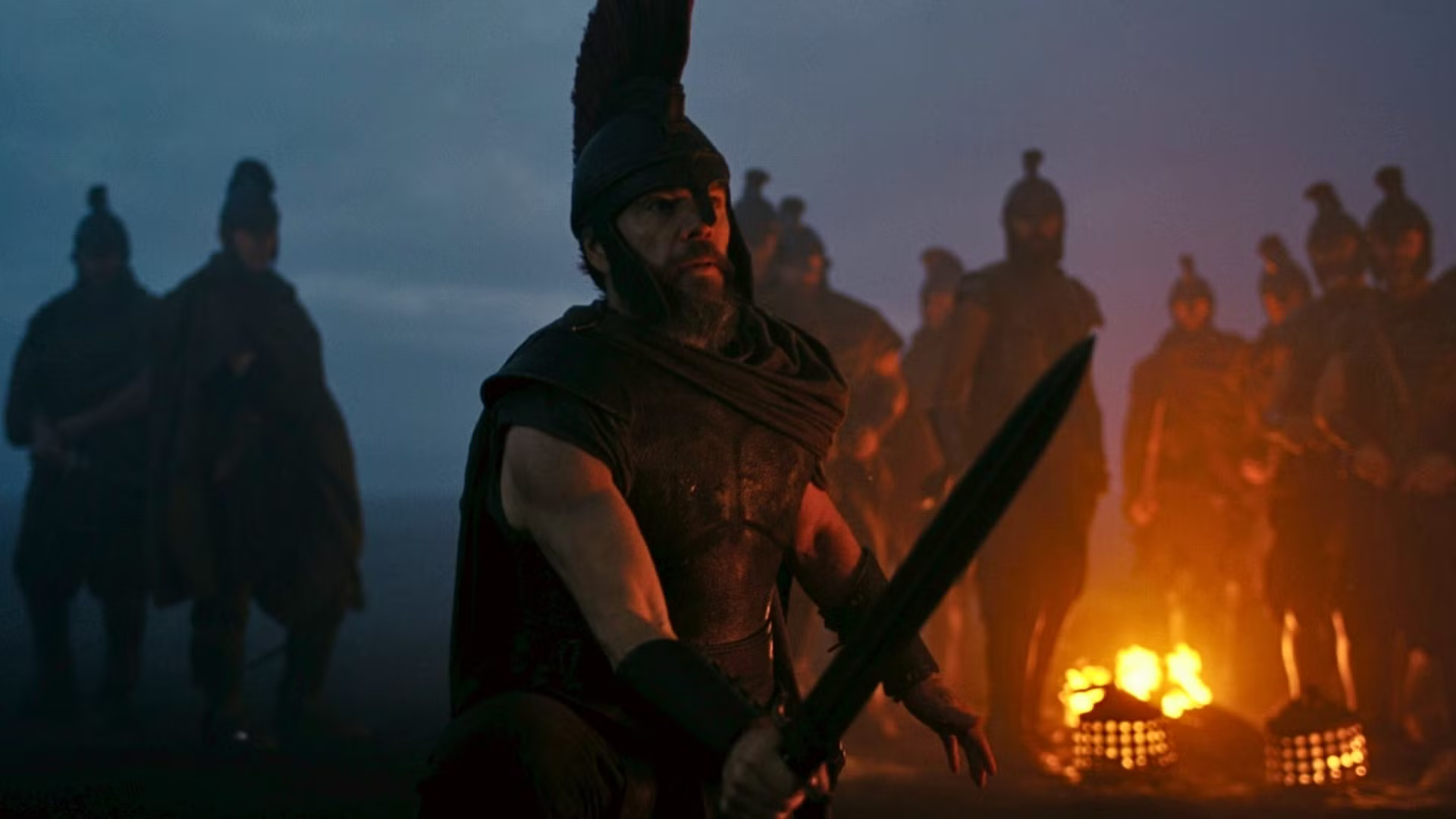
Schedule discipline is one of my Achilles’ heels (hey, that’s also from Homer!) as a referee. It is inevitable, for all but the luckiest groups, that you’ll have sessions where fewer than the necessary number of players are able to attend in order to establish quorum. It is easy in those circumstances to just raincheck it. But next time you are tempted to cancel and wait for a day where you have your full complement of regulars available, instead you should declare an Interlude Session with those who can show up, and any other friends who may not be in the campaign but have availability to jump in for a session that day.
For an Interlude Session, everyone plays some other set of characters in the setting. This is most effective if they are characters that have already been established in the campaign, like one of the player character’s children who is lost and the player characters have been searching for, or a set of rival adventurers they’ve had frequent run-ins with, or recurring villains. If you already have a table of Recurring Characters on your random encounter table, that could supply you with a few other possibilities for the Interlude. While the typical Interlude Session would be something happening in the setting simultaneous to the main action of the player characters, you could also set the Interlude Session as a prequel of sorts, a generation or an eon before the events of the campaign. And you don’t have to necessarily play as these characters either. In fact, the best way to incorporate a recurring villain may be to play as alternate characters who are almost certainly doomed in their attempt to thwart them. This is similar to the most interesting idea from the Vecna Lives adventure where you play high-level wizards as a prologue to the adventure proper.
The Interlude Session is also a perfect opportunity to try some other game system. If you are at all like me, you have more game shit on your shelf than you’ll ever actually get to the table, so might as well pull one of those and use it for this one-off one-shot. Blades ‘68 (probably the most interesting TTRPG I’ve read all year) is chock full of neat ideas, but one that most tickled my fancy and is relevant here is the idea of doing Interlude Sessions of Blades in the Dark (set 100 years in the fictional past) where those major flashbacks tie in to the events of the main campaign. Game system could also just reflect a change in tone: you are playing Mythic Bastionland so everyone is a knight, but in the interlude where you all play as the nasty, freakish river cultists hellbent on bringing about the end of the world, you play that out using Mork Borg (same initials, different system).