I'm Bringing Accuracy Back
One of the greatest achievements of Into the Odd, itself a landmark in TTRPG innovation, was removing the “to hit” roll. Into the Odd didn’t actually invent this technique (those origins are believed to be this 2010 blog post from B/X Blackrazor), but it popularized it in the mind of many, especially via its successors like Cairn. It also became a big selling point for MCDM’s latest game, as the more 5e-pilled among us took notice (though perhaps not explicitly) of the innovations from the OSR. Removing the to-hit roll is much lauded for its role in speeding up combat without losing much nuance. It was a big inspiration in my own efforts to boil the multiple rolling process for shooting in the wild west RPG, Boot Hill, into a more elegant single roll. One of my oft-repeated design mantras is “never roll twice for one effect”.
But now I need to add back accuracy. Oops. A pun got me into this pickle. A few years ago, I was working on an adventure that is a mashup of White Plume Mountain and Mewtwo Strikes Back called Vileplume Mountain when the perfect name for a Pokémon-themed OSR system popped into my head: Into the Oddish. It was too perfect to not add to my to-do list. So I needed to design a system that attempted to (very roughly) model Pokémon using an Into the Odd framework. In many ways, they have paired surprisingly (or perhaps unsurprisingly) well, but in other ways they clash.
(Speaking of which, you still have time to pre-order)
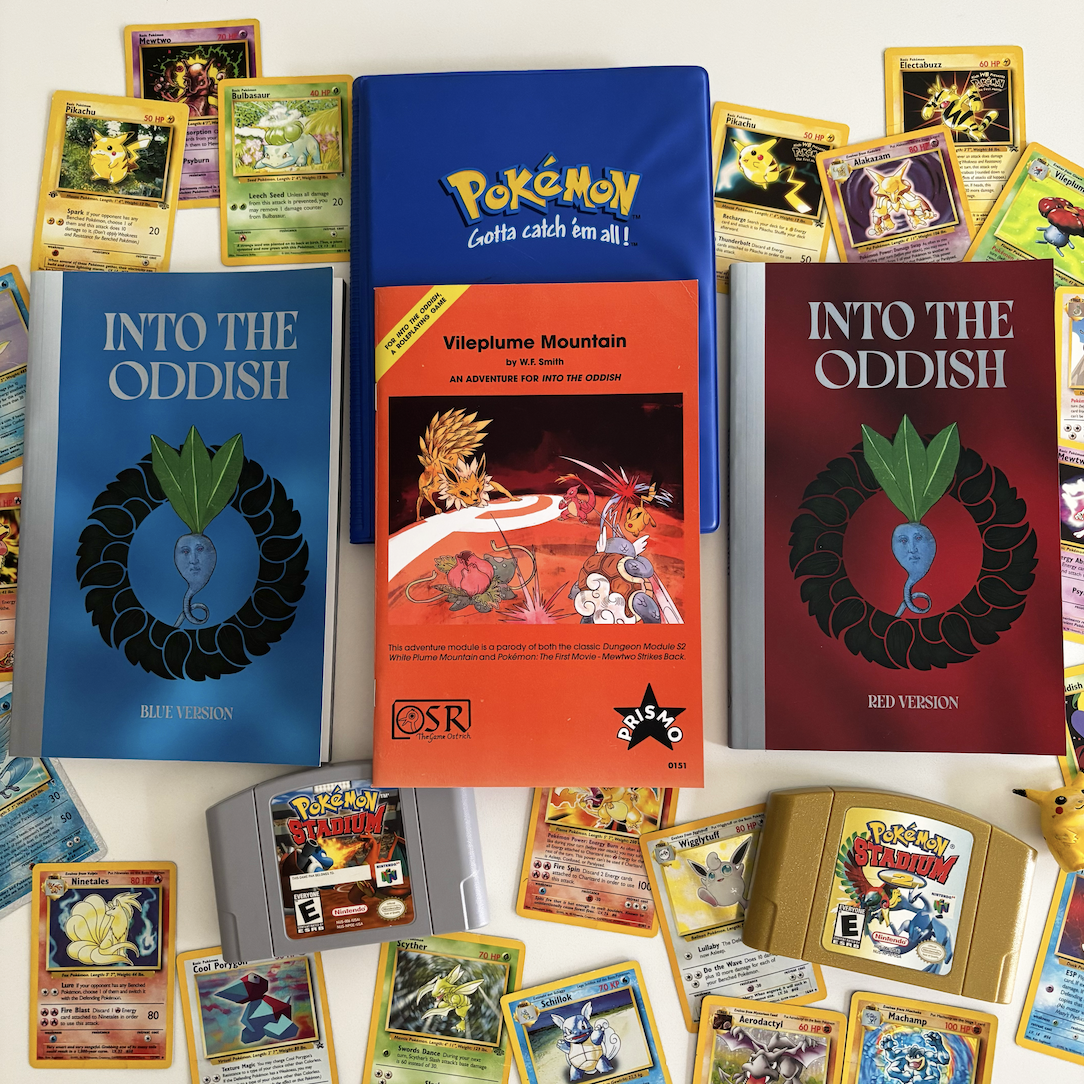
A tabletop roleplaying game where you play as pocket-sized monsters adventuring through the ruins of a Pokapocalyptic world
A world of dreams and adventures awaits!
Into the Ish is a parody of the classic rules-light game, Into the Odd, where you play as pocket-sized monsters instead of ordinary adventurers.
Into the Ish expands the core rules of Into the Odd to capture the genius of monsters fighting each other with elemental attacks. Each player takes on the role of a single monster in a party of adventurers traversing the Pokapocalyptic landscape after the mysterious disappearance of all humans. Search the world for rare Technique Machines, collect badges and evolve your monster.The Catch All Bundle is for Into the Ish completionists and includes Into the Ish (Red Version), Into the Ish (Blue Version) and the Vile Mountain adventure at the steepest discount.
What’s in This Bundle?
15 playable pocket-sized monsters with unique move sets and two evolutions each
Expanded Into the Odd-like rules covering elemental type effectiveness, moves that lower accuracy for auto-hit combat, and status effects like poison
Over 100 moves for your characters to learn and wield against your enemies
74 enemy monsters to challenge players at every stage of their journey (and compatible with other Into the Odd games, like Cairn)
Writing by W.F. Smith (Prismatic Wasteland), Character Sheet by Bruno Prosaiko, Front Cover Art (Vile Mountain only) by Sam Mameli (aka Skullboy), Back Cover and Interior Art (Vile Mountain only) by Hodag RPG (aka the Hodag), Layout by K.T. Nguyen (Barkeep on the Borderlands)
What You’ll Get?
Into the Ish (Blue Version): 86 pages, perfect-bound book, digest size (5.5” x 8.5”), full color cover and interior
Into the Ish (Red Version): 86 pages, perfect-bound book, digest size (5.5” x 8.5”), full color cover and interior
Vile Mountain: 36 pages, perfect-bound zine, digest size (5.5” x 8.5”), full color cover and black-and-white interior
The downloads: Hyperlinked PDFs of the core rules and adventure
When You’ll Get It:
Now! Pre-Orders have been fulfilled and these are shipped out as they’re ordered.
The first clash is just attack damage itself. In Pokémon, one of the primary elements of combat is improving damaging capabilities by matching your attack’s type to the attacker’s type, using a type of attack that is “super effective” against the defender’s type, or boosting your attacking capabilities with special moves. Or, as my colleague Dan at the Throne of Salt blog calls it, “A Sequence of Repetitive STABbing Motions”. At first blush, it seemed Into the Odd already had a solution: impaired and enhanced attacks, whereby the damage is either impaired to d4 or enhanced to d12. You could rule that a super effective attack is enhanced, an ineffective attack is impaired, etc. However, this fails to approach the nuance of Pokémon. You need multiple stacking effects. At first I thought I could just make impairments/enhancements more granular by just stepping damage up or down by one dice size (e.g., d6 to d8, d8 to d6, etc.). But upon further thought, I decided a better way is with rolling multiple dice and taking the highest or lowest. For instance, when you have a same-type-attack-boost on a move that deals d6 damage, instead roll 2d6 and take the highest. When you have same-type-attack-boost AND the attack is super effective, you roll 3d6 and take the highest. The attack is still bounded (it will never do more than 6 damage) but it still deals more damage on average. Honestly, this isn’t groundbreaking but it does give combat a more Pokémon feel as you try to collect more advantages to your attacks.
The second clash was accuracy, the trickiest problem. Accuracy is important in Pokémon. If you haven’t been frustratedly spammed by an accuracy-reducing move like sand attack, you’ve never truly lived (and likely fainted). But I’m using Into the Odd as the base, so attacks immediately hit! I have modified Into the Odd’s auto-hit rules before for an earlier iteration of Prismatic Wasteland, but that emphasized armor’s protection more than it does the attacker’s accuracy. So those didn’t seem like a good fit in this instance. In Pokémon, accuracy is more of an active choice the defender makes in combat (by increasing their evasion or reducing the attacker’s accuracy). So I wanted a rule that reflected this. This also reflects the principle proposed by the Trilemma Adventure blog that the “player who desires the outcome of a mechanic should be responsible for invoking it.” It is the player who chose an accuracy reducing strategy who invokes that rule, not the player suffering from it.

When you use a move that impairs an attacker’s accuracy, whenever that attacker attacks anyone, you roll a die. The die is 1d4 the first time you lower their accuracy, 1d6 the second time, 1d8 the third time, and 1d10 the fourth time. You cannot lower an attacker’s accuracy more than 4 times in a battle. Each time you lower their accuracy, record that result. If the result is higher than a previous result, it supersedes the previous result. When that attacker attacks anyone, if their damage is below the amount rolled, then the attack misses. You are responsible for remembering and invoking this effect, not the attacker.
When you use a move that increases your evasion, this works the same way, except it applies to all attacks against you instead of all attacks made by the attacker. Again, you roll up the dice chain from 1d4 to 1d12, recording the highest result each time.
Example: Spearow’s Pocket Sand
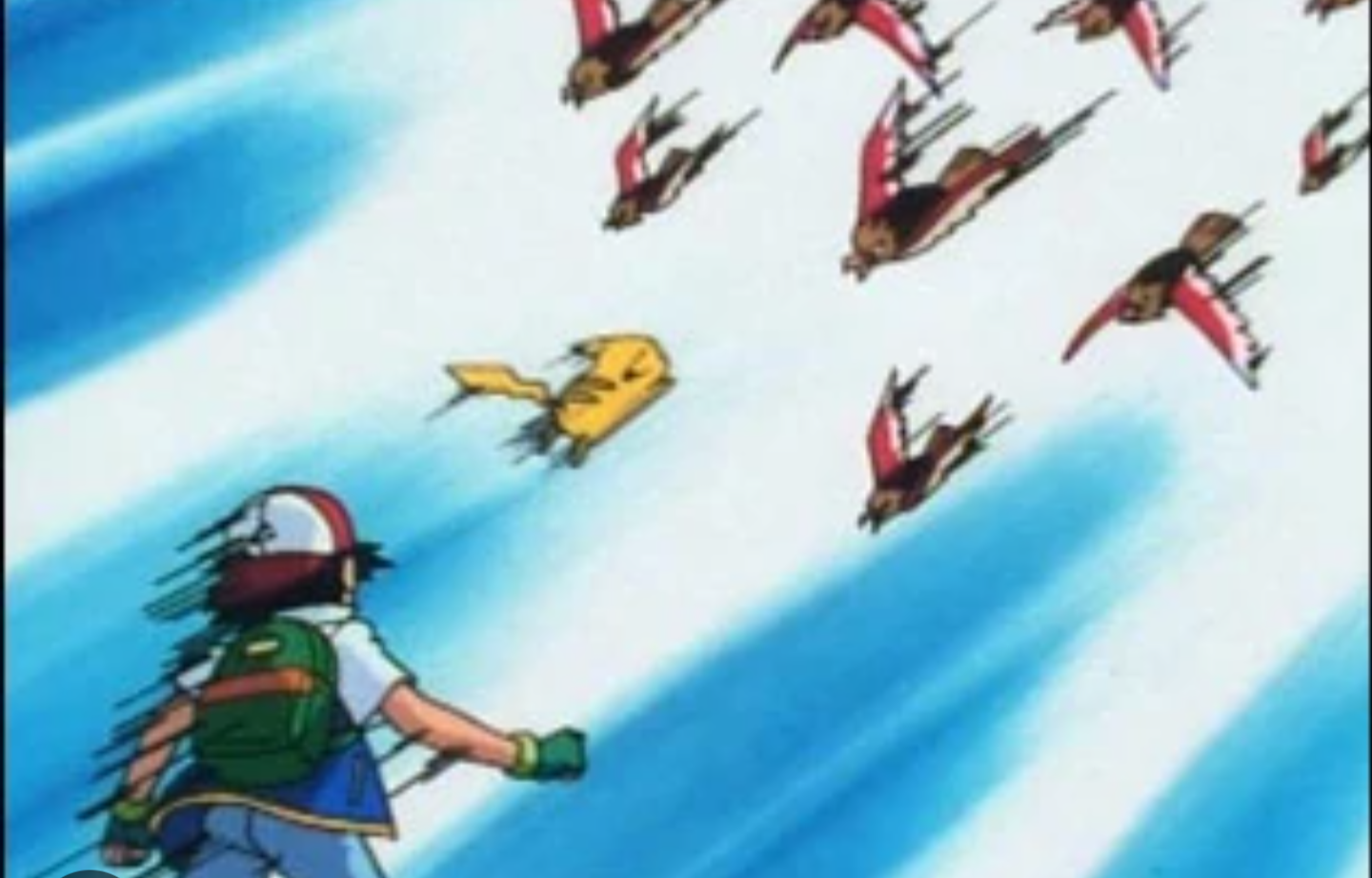
A Pikachu is fighting a Spearow. The Spearow begins the fight by spamming sand attack twice, a move that reduces accuracy by 1 step for a total of 2 reductions. The Pikachu used growl, which reduced the Spearow’s attack, and is about to use thundershock, an attack that deals 1d6 electric damage.
Because Pikachu is electric type, thundershock benefits from same-type-attack-boost. Because Spearow is flying type, which is weak to electric, the attack is also super effective. So Pikachu will roll 3d6 and take the highest for damage.
However, because Pikachu’s accuracy is reduced twice, Spearow rolls two dice to potentially make the Pikachu miss. They roll 1d4 first, then 1d6. They roll a 1 followed by a 3. Since the second result is higher than the first, they they use the 3 to determine the minimum Pikachu needs to roll on damage to land an attack instead of miss. So if Pikachu rolls either a 3 or below, the attack will miss. If Pikachu rolls a 4, 5, or 6, it will still land the attack on the Spearow (or anyone else; all of Spearow’s allies benefit, but the Spearow’s player has to remember to evoke it). Pikachu rolls the 3d6 and gets a 1, a 2, and a 5. They take the highest, which is 5, and since that is above the Spearow’s accuracy die result, the attack hits. Pikachu is a murderer, once again.